New York’s Untold Surf History
1960s

The old cliche “there are no waves in New York” has been banished to the uninformed perspective of those who have not followed NY surf culture over the last 50 years. Today, New York has an iconic place in the world of surfing, however the early years from the beginning of surfing on the mainland U.S. in the twentieth century were virtually lost. Stories of how surfing came to the beaches of urban Brooklyn all the way East to the cobblestone points of Montauk have largely been handed down through the decades, some of them factual many of them made up or exaggerated, but the truth is more legendary than one can imagine.
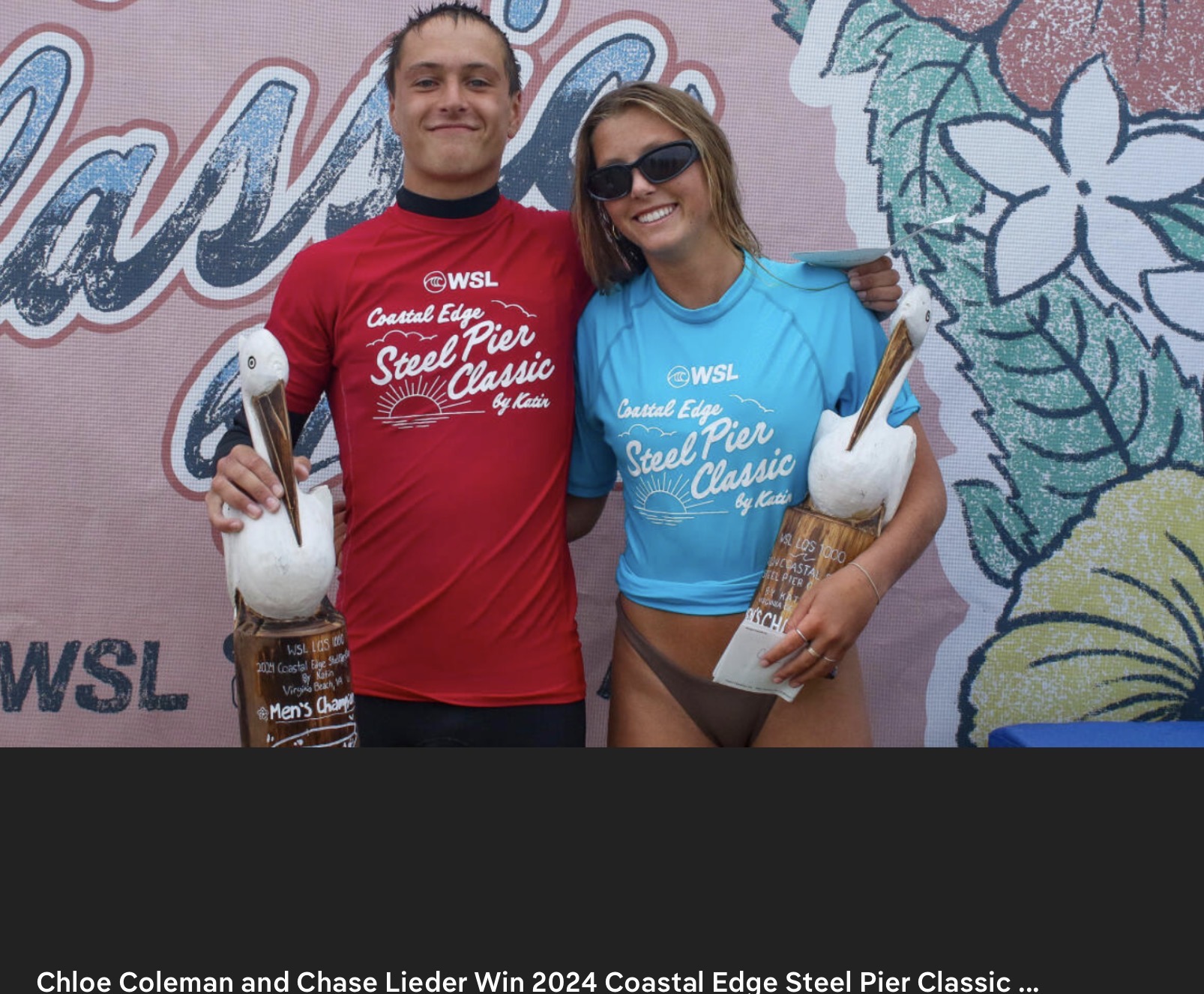
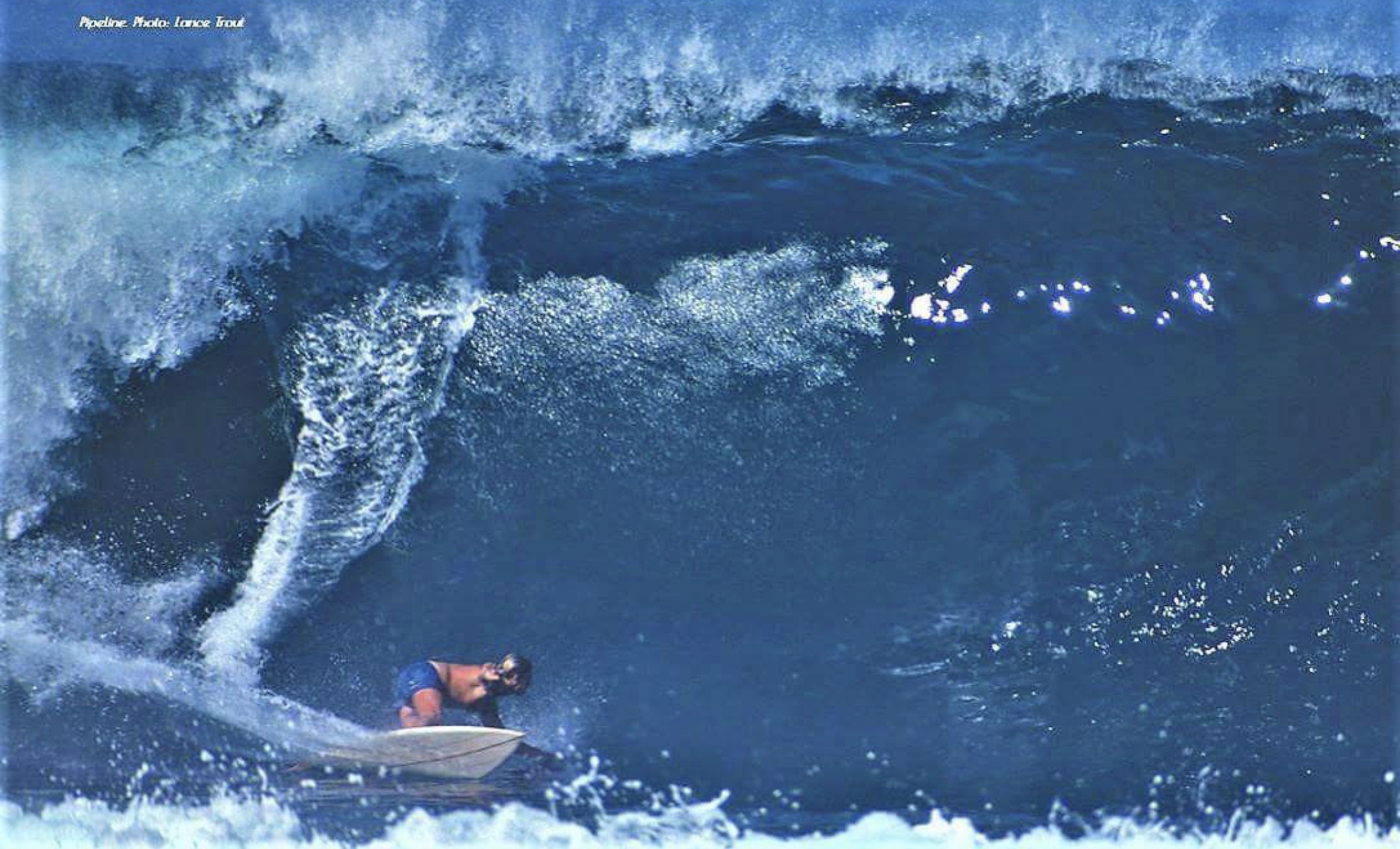
Let’s work backwards from the present. New York’s coastline is 127 miles long; you have beaches in Brooklyn that you can reach by subway and on the ride east you pass barrier island sand spits that can produce surf comparable with the best beach breaks in the world, finally ending on the reefs and points surrounding Montauk. Today the skill levels of the surfers traversing these spots have produced world class athletes from top ranked world tour longboard competitors Chase Lieder and Chloe Coleman to favorite son Balaram Stack, who has earned the respect of surfers around the world with his ability to surf everything from two foot Rockaway Beach to giant surf in places like Tahiti’s Teahupo’o and Hawaii’s Pipeline. Stack is the first New York surfer to win the prestigious Pipeline Masters in 2022.
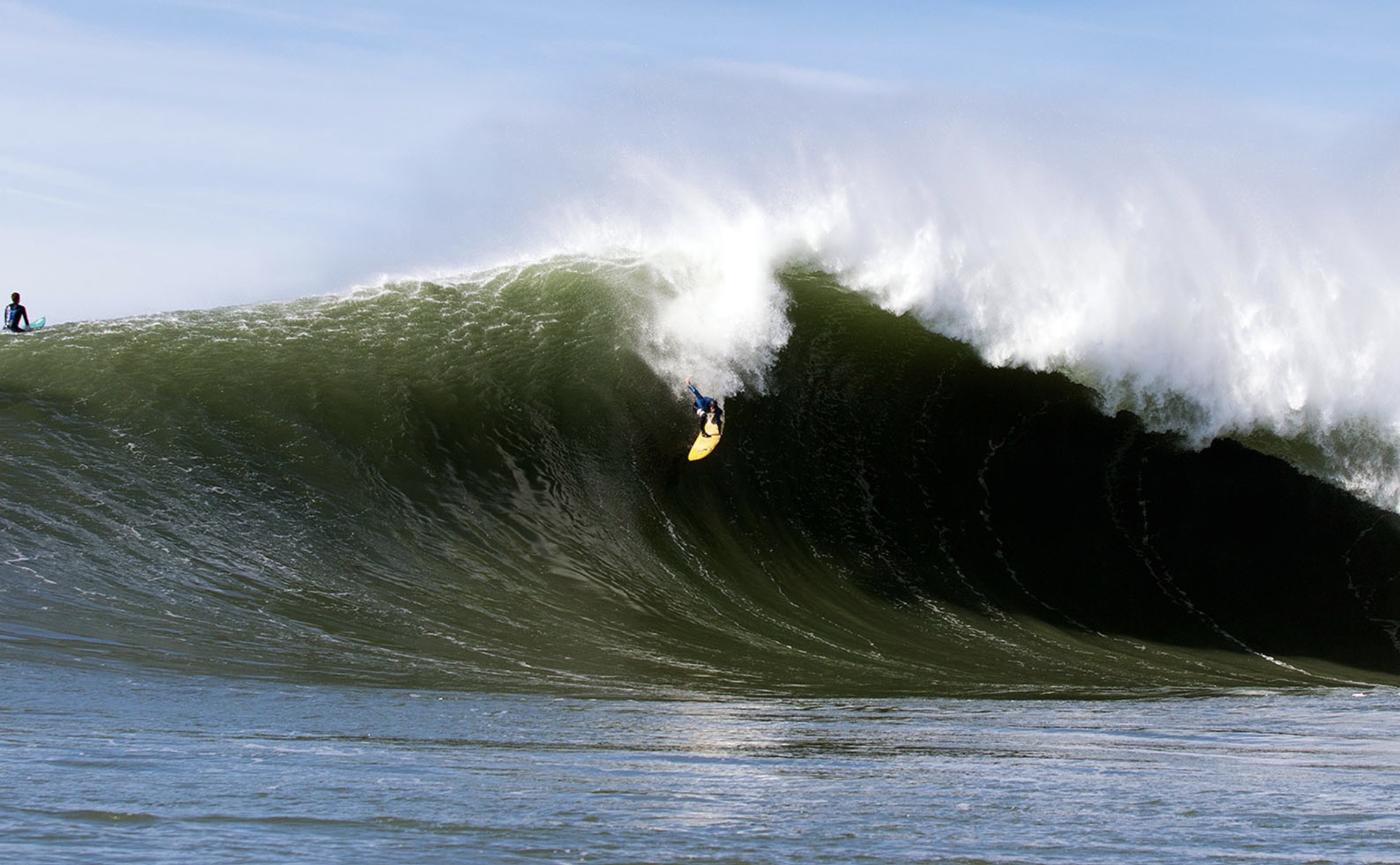
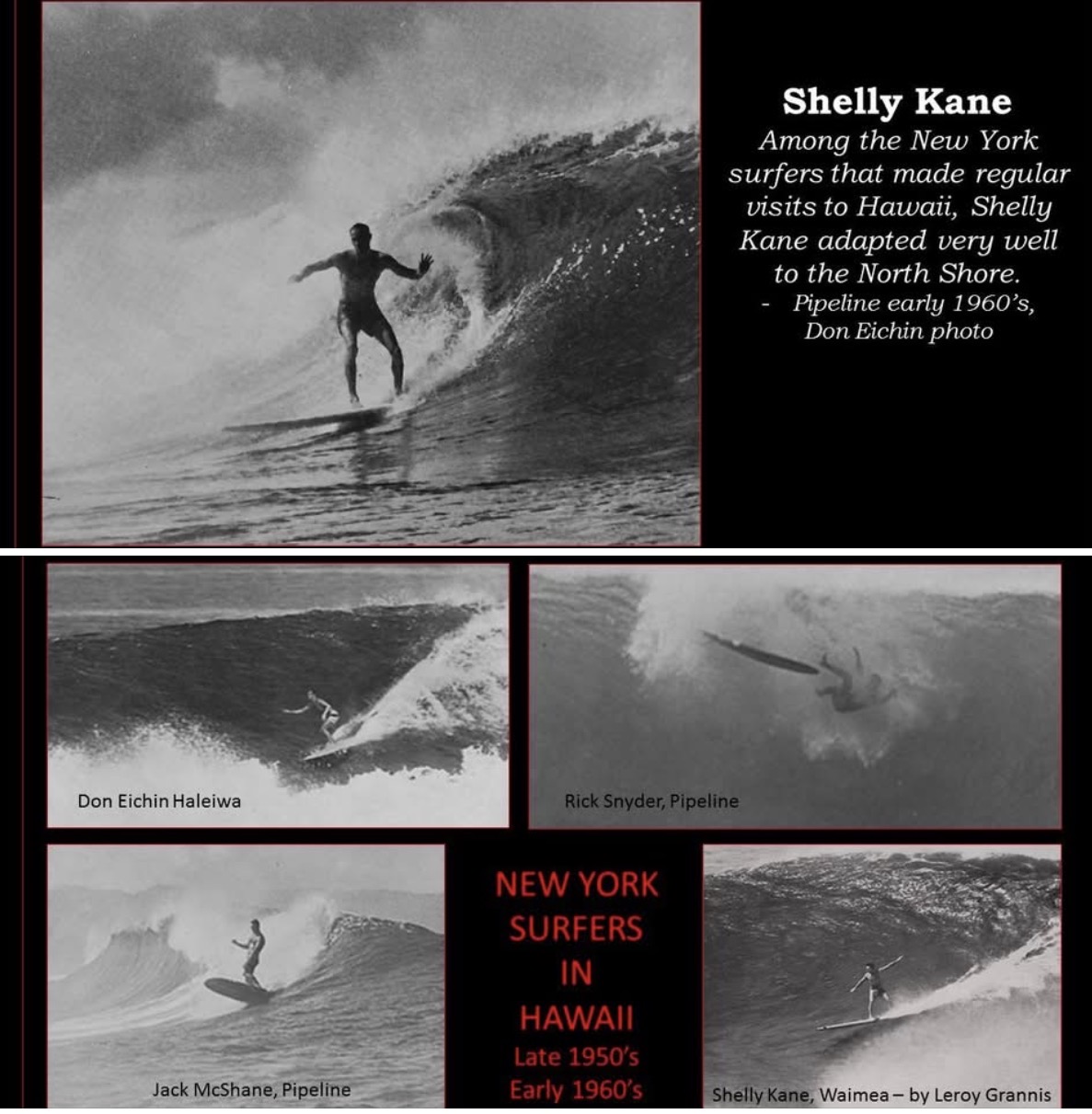
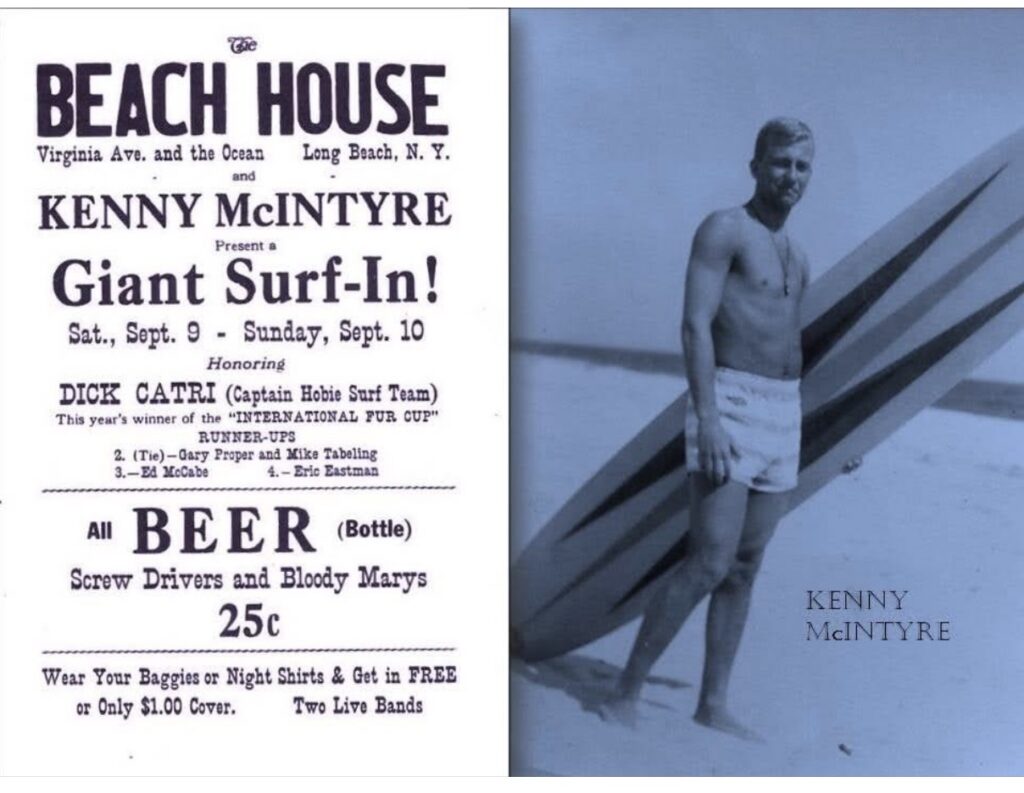
Will Skudin from Long Beach has continued the legacy of New York surfers following in the footsteps of pioneers like Rick Snyder, Don Eichin, Shelly Kane and Jack McShane, along with Billy Sautner from Rockaway who first charged the North Shore in the 60s. Kenny McIntyre, who owned The Beach House in Long Beach and was an all-star point guard at St. John’s had his photo published in International Surfing riding good sized Waimea Bay. Skudin’s performances in heavy surf over the last 20 years have earned him a reputation as one of the top big wave surfers in the world. His willingness to charge waves at places like Jaws, Mavericks, Nazare, and recently at massive Cortes Bank off San Diego has cemented his reputation as one of the best. Several young New York surfers like Kurt Rist and Pete Shaw are following in Skudin’s path, willing to push the limits in massive surf around the world.
Stack and Skudin follow in the legacy of whom many consider a pioneer of New York surfers who have garnered attention internationally, Rick Rasmussen. There were a number of top competitive surfers coming from New York in the 70s and 80s from big wave charger Eric Penny to East Coast Men’s Champion Mike Oppenheimer, but it was Rasmussen who burst onto the scene in 1974 winning the U.S. Championship in pumping surf in Cape Hatteras, North Carolina, an event that received extensive coverage in Surfer and Surfing magazines, propelling Rasmussen’s name around the world. He would go on to bring attention to the newly found surf spot G-Land on the island of Java in Indonesia, filmed for ABC TV’s “American Sportsman.” Rasmussen’s willingness to surf huge waves, specifically at Pipeline, opened the eyes of the surf world to the skill sets of this New York bred surfer. Sadly, Rasmussen would die in a drug deal gone bad in New York while he was still at his peak of surfing prowess.
New York surfers like Tony Caramanico from Montauk and Surfing Magazine publisher Bob Mignogna were just a couple New Yorkers who would add their New York influence on the ever-broadening surf culture of the 70s right to the present. Ultimately this group owes much to the pioneers of New York surfing, who rose from the buttoned-up environment of the 50s and 60s to light the fire that would create the rich surf culture that is present in today’s New York. A trio of visionaries, Bob Hawkins, John Hannon and Charlie Bunger, all East Coast Surfing Hall of Fame Inductees, would not only catch the surf bug but would also start a surfboard manufacturing boom that catered to the local explosions of young New Yorkers catching the surf stoke.
Bob Hawkins made his first surfboard in 1957 out of Styrofoam and by 1959 was manufacturing surfboards and headed to Hawaii where he had Pat Curran make him a 10’6 gun that he used to charge big Makaha. Hawkins would marry his wife Jeannie the following year, a pioneer woman’s surfer who won the first East Coast Championship at Gilgo Beach, and together they owned two surf shops on Long Island with Bob shaping boards throughout the 60s.
John “Jack” Hannon started surfing at the age of 11 in 1938 riding the bulky Tom Blake hollow boards that were commonly used by the local lifeguards for life saving purposes but were difficult to ride on the beach breaks of New York. After college and a stint working in Long Beach, California, he returned to New York in 1959 with a brand new Hobie and six surfboard blanks with plans to begin a career as a surfboard shaper. In 1961 he started Hannon Surfboards opening a shop in Great Neck, Long Island, NY that he would eventually close in 1969 after the short board era took over the surfing world. Hannon is often called the Father of New York surfing.
Charlie Bunger started shaping surfboards in 1961 for himself and the local kids; soon the demand for boards was so great that he moved to a 2000 square foot facility in 1962 and with his business partner Kevin Kelly started Bunger Surfboards. Retail shops soon followed and the Bunger brand made its mark up and down the East Coast. Bunger team riders were legendary with Ed Fawess and Rick Rassmusen among notable members. Today, the Bunger brand is still at the forefront of New York surfing with Charlie Jr. and brother Tommy still carrying on the traditions first established by their dad.
Now the stories of New York surfing pre 1950s start to get lost. Lifeguard surfers were the norm during the 30s and 40s with Tom Blake’s visit to Long Island in 1934 a footnote to the prevalence of Blake hollow boards being the board of choice during that era. Recently doing a lot of research through newspapers of that time, I have uncovered a rich history, and might I say a golden era of surfing that was lost for many reasons. Primarily, I believe the two world wars took many of the young men off the beaches and into the Army or one of the other services. A number of these stories will change how we look at surf history on the mainland U.S.
The year is 1909. Alexander Hume Ford, surfing proponent, founder of the Outrigger Canoe Club in Honolulu, HI and Hawaiian transplant from South Carolina is visiting New York City. He writes a letter to the Hawaiian Gazette describing an experience that changes how surfing came to the East Coast. Dated September 1909, Ford writes, “Alvin Keech from Hawaii is here, and invited me to come down to Edgemere L.I. and go out surfboard riding with him. This is the first time I have seen real surfboarding on the Atlantic Coast. Of course, I went, and Keech had two boards ready. We went out and caught several waves, getting a standing ride of perhaps two or three hundred feet, but that was great for the Atlantic. Keech daily astonishes the natives but even he cannot keep in the water in these latitudes more than half an hour at a time.” This letter from Ford flips the narrative on East Coast surfing, Alvin Keech a student from Franklin and Marshall was born in Hawaii, his father originally from York PA, Keech the next summer of 1910 would head to Atlantic City where he would give surfing demonstrations sometimes at night under spotlights a full two years before Duke would arrive after the 1912 Olympics.
The following year stories of local surfers would hit the newspapers; the first real prominent proponent was New York Fire Chief Edward Croker. In a 1910 article in the Atlantic City Press, his surfing exploits are described, “Edward Croker, the Chief of the New York Fire Department, has gotten it into his head that he can ride one of those planks in the surf just as well as he can ride at breakneck speed in his automobile on a fire call.” Years later he would move to Long Beach, Long Island and build himself a concrete fireproof house.”
New York brought international surfers to the city, also. In 1915 a surfer named George Walker from New South Wales, Australia came to stay at the Nassau Hotel in Long Beach. Walker is believed to be related to Tommy Walker, who surfed on a Hawaiian Surfboard in Manly, a suburb of Sydney, Australia, in 1909, five years before Duke arrived. Notably, he made the June 28 edition of Brooklyn Eagle because he was giving surfing demonstrations and lessons to the young women of Long Island.
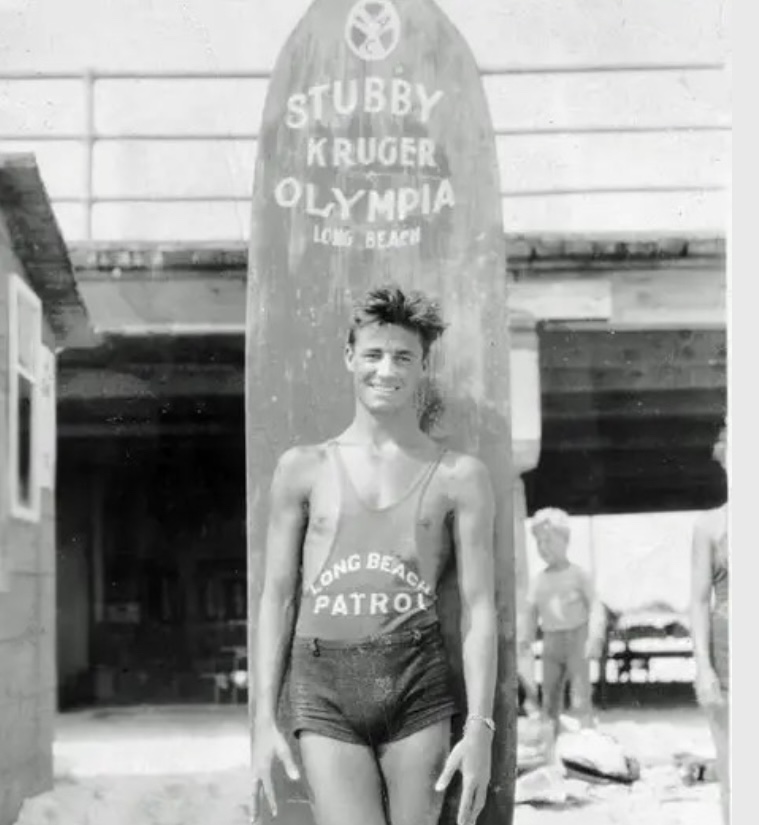
And lastly, but most importantly, Duke Kahanamoku’s arrival in 1918 for swimming demonstrations with his fellow Hawaiian Stubby Krueger coincides with a huge hurricane swell. Multiple papers report Duke riding the waves in front of the Castle Hotel for over a half mile. In an article in the Nov 17, 1918, San Francisco Bulletin, Krueger recounts the events of the day. “You should have seen us stage an exhibition at Castles by the Sea, the Long Island resort started by Vernon Castle. A big storm was on, and the lifeguards kept everyone out except we fellows from Honolulu. The Duke took a surfboard out to the last line of breakers, half a mile out and rode all the way in at express train speed.” Krueger would stay in New York throughput the 20s and his personal surfboard is photographed with Long Beach Local lifeguard Larry Burke in front of the boardwalk near the Olympia pool.
As you see by the plethora of stories about early New York surfing, it’s apparent that New York and much of the Northeast U.S. had a prominent role in the early proliferation of surfing on the mainland.
click on image to view