hmundie17@gmail.com

About Heather Mundie

This author has not yet filled in any details.
So far Heather Mundie has created 3 blog entries.

East Coast Surfing in 1912 – A Story About Sam Reid

A Story About Sam Reid from Atlantic City, NJ

1912

with Mike May

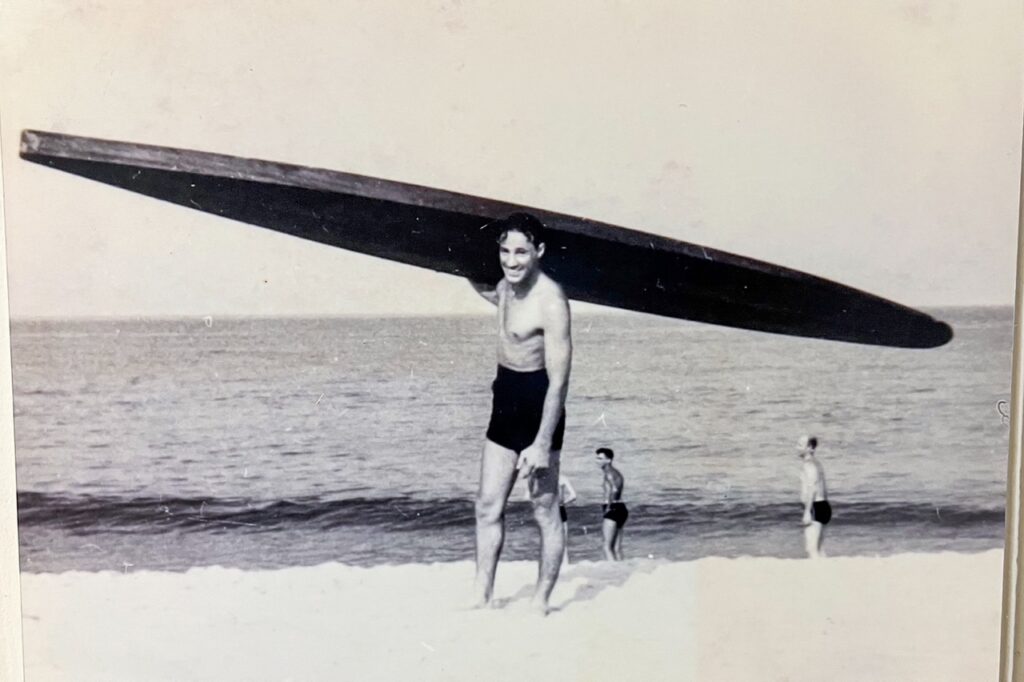
The year was 1912. Sam Reid, a boy of seven, stood on the beach and was amazed by the experience of seeing Olympic champion, Duke Kahanamoku put on a surfing display in Atlantic City, New Jersey. Reid was so excited he took his mother’s ironing board into the surf the next day to ride waves like his new-found hero, the Duke. He rode the ironing board for four years.

Reid was born in Philadelphia in 1905, though he would change his year of birth in the early ’20s for reasons that likely had to do with starting high school at an age when most young men were near graduation. William Reid, Sam’s father, was a direct descendent of naval hero Samuel Chester Reid, who designed the 1818 version of the American flag.

By 1910, William had deserted the family and moved to San Francisco. One can imagine how the beaches of Atlantic City would become a playground for a young fatherless boy, and how seeing the great Duke Kahanamoku would leave such a lasting impression that it would send Sam down a path that would change his entire life.

Sam and the rest of his family—mother and older sister, both named Lucy, and an older brother named William—lived in Atlantic City until 1919, at which point Sam was building his own surfboards and had likely developed into a seasoned young waterman.

By 1923, the family had moved to Santa Monica; Lucy and Sam both attend Santa Monica High—Sam as an 18-year-old sophomore. This is likely where the discrepancy in his birthdate comes from.

Around this time, Sam came into contact with Duke Kahanamoku again, this time on the beach in Santa Monica. Duke was working in Hollywood and, as Sam later wrote, any chance the Duke got he would go to the beach to swim and bodysurf next to Crystal Pier. Duke would amaze onlookers by swimming out further than anyone and riding waves back to the beach. Closer to shore, he would sometimes bodysurf with young children on his back.

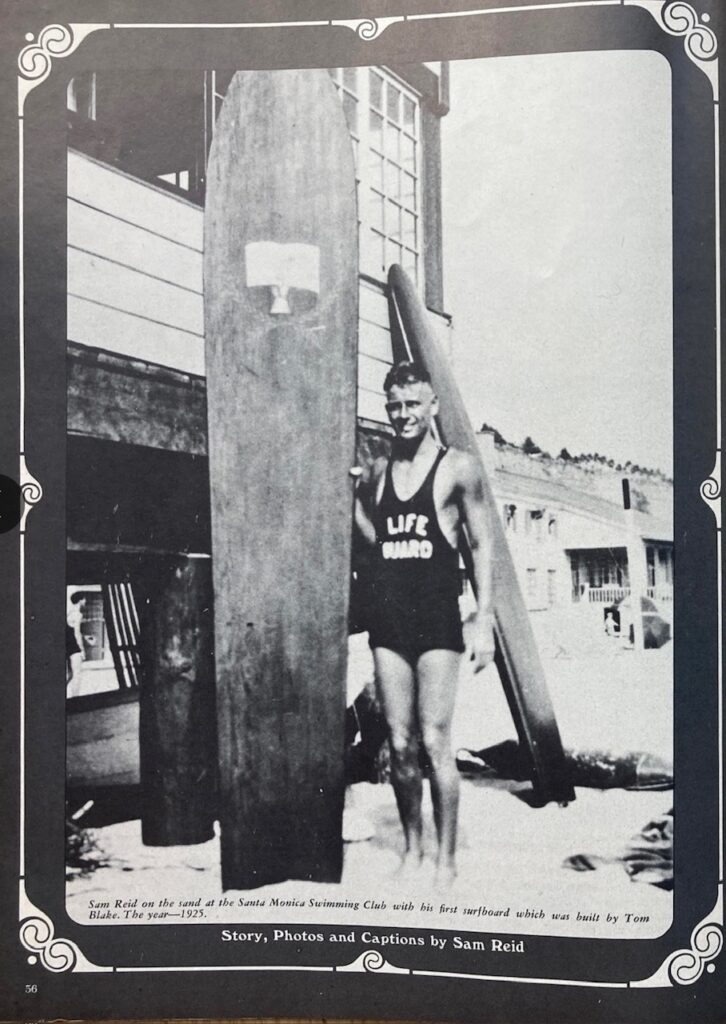
At 19, still living with his mother and sister, Reid got a lifeguard job at the prestigious Santa Monica Swim Club. Duke was often a club guest, and Reid would shoot him questions about Hawaii. What was the surf like? Should he go? If so, could he get a job? Duke encouraged him: “You’re young,” Reid later wrote, quoting the Duke. “Go see my brothers David and Sam; tell them I said Aloha.”

Reid was 21 in December 1926 when he stepped off the SS Calawaii after it docked in Honolulu Harbor. Reid notes that this was a Hawaii without streetlights and only one big hotel, the Moana, doing business on the beach at Waikiki. It didn’t take Reid long to meet the Kahanamoku brothers and find a job at the soon-to-open Royal Hawaiian Hotel. Within a day of his arrival, Reid wasn’t just surfing with Duke’s brother David but riding Duke’s personal board.

Reid quickly assimilated into the everyday life of Waikiki. His job at the Royal Hawaiian was to give information about the Islands to guests, and when he was not surfing or swimming, he was immersed in the Bishop Museum library and archives. Reid was so taken with the history of Hawaii and the Hawaiian people, that he taught himself the rudiments of their beautiful and poetic language. On the beach in between surf sessions, David and Sam Kahanamoku taught Reid the history of Hawaiian surfing as they maintained their roles as the leaders of Hui Nalu, the beachfront surfing and paddling club founded by Duke in 1908. Reid himself would eventually be accepted into Hui Nalu—quite an accomplishment as most members were Hawaiian.

In September 1927, back in California, Sam Reid and Tom Blake, another transplant Santa Monica surfer and lifeguard, together made a little surf history. Reid and Blake drove up the coast to surf Malibu—something that had never been done. Reid later described the day: “Visualize if you can, a beautiful September day in California. The coast highway was then a two-lane road, dirt most of the way. Tom Blake had stopped by the Santa Monica Swimming Club to pick me up. In those days, cowboys with guns and rifles still rode the Malibu Ranch, and the gate at Las Flores Canyon had a “No Trespassing” sign on it. We took our 10-foot redwoods out of the Essex rumble seat and paddled the mile to a beautiful Crescent-shaped beach that didn’t have a footprint on it. No buildings and, of course, no pier! There was no audience but the seagulls.” Blake described the day in simpler terms: “The place was deserted except for seagulls and pelicans and the Rindge house. To be the first to ride it, I caught a 3-foot wave, and we played around in it for an hour or so, real exclusive surfing.” The history of Malibu will note that one of the first two surfers to ride the wave at the fabled point was from Wisconsin, the other from New Jersey.

For the next ten years, Reid traveled back and forth from Honolulu to Los Angeles. For two years, beginning in 1927, Reid lived in Palo Alto for part of the year, worked in San Francisco, and took classes at Stanford University. (Reid wouldn’t graduate from Stanford until after World War II, in his early 40s.)

In 1927, during a return visit to Hawaii, Reid traveled with the great Hawaiian surfer and Stanford swimmer Jack May. The two would be connected for many years both as members of Hui Nalu and as rivals in multiple swimming, paddling and surfing competitions. In the 1930 census, Reid is listed as a lodger with the May family at their home on 1445 Punahou Street in Honolulu.

Reid’s achievements in swimming and paddleboard racing are thoroughly documented in the Honolulu Star-Bulletin. He was Hawaiian surfboard champion in 1928 and 1932—although “surfboard” in this case is misleading, as the titles were for paddleboard races held in the Ala Wai Canal. Reid would win multiple swimming titles between 1928 to 1935.

By 1936, Reid had backed off competition but was still involved as a judge. He also became the aquatics coach for the Honolulu Athletic Association and continued to work for the Royal Hawaiian and as a lifeguard when back in California.

In 1940, Reid registered for the draft. Two years later he was a warrant boatswain in the Navy. As reported in the Los Ángeles Times, Reid received a Purple Heart in 1944 after his ship was torpedoed and sunk. The following year, while awaiting transfer to the DDS Reid—named after his great-grandfather Samuel Chester Reid—that ship was sunk in the Philippines with 103 men lost.

After the war, and after graduating from Stanford at age 42 with a degree in Political Science, Reid took a job doing promotional work for the Sun Valley Resort in Idaho.

Reid moved to Santa Cruz around 1950 and eventually became the city’s lifeguard chief. Records show that he was married in the early 1960s, but people who knew Reid in Santa Cruz believe that he lived alone. Still dividing his time between California and Hawaii, Reid found work with the Hawaiian Tourism Board. He also wrote articles and letters to the press. In 1955, Reid did a feature article for the Star-Bulletin titled “Surfing . . . Then and Now,” and here is where Reid’s reputation as a curmudgeon begins to take hold. “Surfing at Waikiki has become a dangerous, haphazard sport,” Reid wrote, “with seemingly no rules of conduct. The old strict code of surfing that I had been taught by the Kahanamokus was forgotten. What happened to the old boards, the old style of safe surfing?”

Reid continued in this manner while writing a trio of articles for Surfer magazine during the 1960s, in which he finds glory in the past and mostly criticizes the present; the title of his 1965 Surfer remembrance feature was “The Days of Great Boards and Real Watermen.”

In 1971, when Reid was 66, he wrote to the Star-Bulletin to address what he felt was a slight against Duke Kahanamoku by the organizers of the United States Surfing Championship, held annually at Huntington Beach. Duke had been the guest of honor at the US Championships in the previous decade. “Knowing Duke for 40 years, I know how much he must have suffered in having to watch the ‘Sport of Kings’ degenerate into exhibitionist tricks by modern midgets.” Huntington, Reid continued, picking up steam, “is a playground for awkward, off-balance, spreadeagled flat-footed squatters who inflate their egos by disappearing under an ugly mussel-encrusted concrete pier in a sea of discolored oil, toilet paper and other trash.”

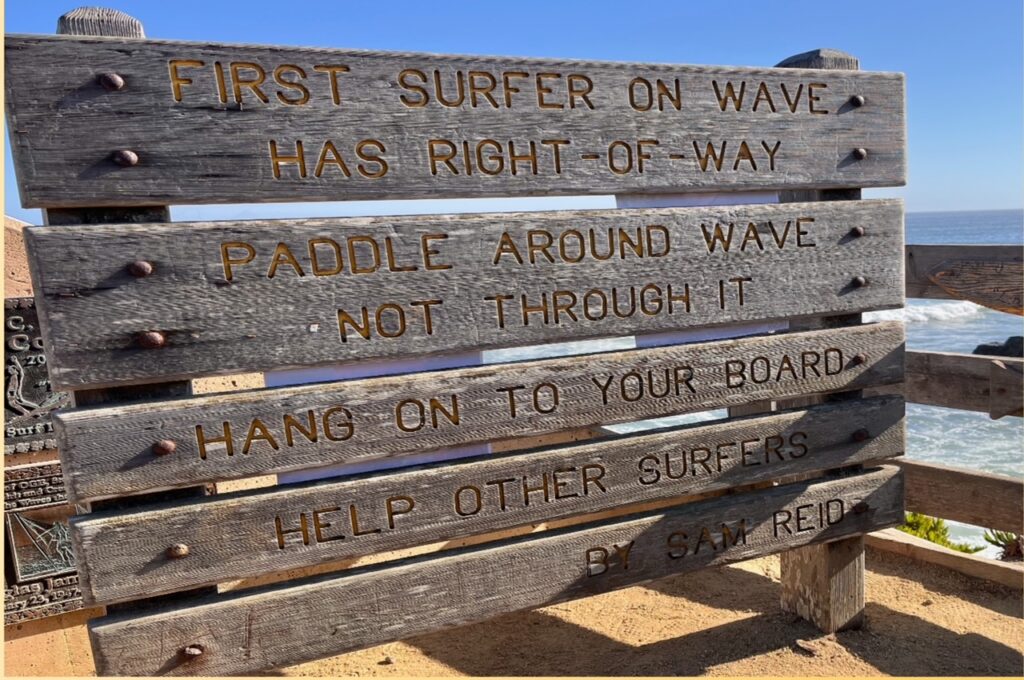
Despite his often-pessimistic view of modern wave-riding, Sam Reid remained a fixture in the surf community of Santa Cruz. In previous decades—but well after foam boards had taken over the sport—Reid could be found paddling his heavy redwood plank into the lineup at Steamer Lane wearing wool bathing trunks and surfing in the style he was taught by his Hawaiian friends in the 1920s. In later years, when Reid could no longer surf, he still drove to the bluffs at the Lane every day in his 1938 Packard and was happy to share stories of the past with Duke and Tom Blake. He was also ready, at all times, to call out surfers who were not following the rules. On the cliff at Steamer Lane is a wooden plaque stating those rules erected by the city of Santa Cruz, quoting Reid. “First surfer up has the right of way. Paddle around the wave not through it. Hang on to your board. Help out other surfers.”

Reid died in his sleep, in 1978, at age 73. “It appeared [that he] died naturally in bed,” the Santa Cruz Sentinel reported, “with a dinner prepared Friday still on the table.” Reid would later have a place of honor in the Santa Cruz Surfing Museum, and his private papers and photographs were donated to the UC Santa Cruz Library.

Although Sam Reid was a true pioneering figure in surfing, his story has mostly been lost to surf history. There are a few reasons for this. First, he mostly pursued his devotion to the sport by himself. Sailing to Hawaii alone in the mid-1920s is very different from arriving in pairs or groups, as surfers did in later decades. Second, unlike Tom Blake, who himself was very much a loner, Reid never turned surfing into a commercial enterprise. Riding waves was at the center of his life, but his career was filled with traditional nine-to-five pursuits. Third, Reid was constantly looking back to the past. Surfing and everything important about it, to Reid, is directly connected to Duke and Hawaii. Finally, Reid was cantankerous. Even among people who knew and liked him, Reid was described as ornery and a complainer. His writings are filled with criticism about the state of surfing and how young surfers are going about it the wrong way. In an early ’70s letter to good friend Tommy Zahn, Reid complains about the ‘dirty hippies” in Santa Cruz, and how the apartments in Santa Monica ruined the area.
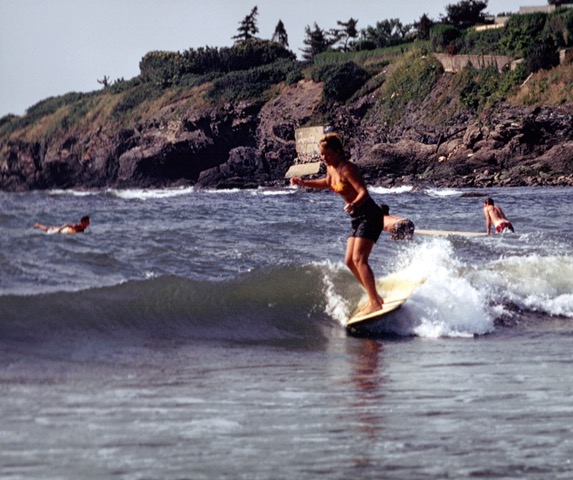
Reid had no interest whatsoever in being part of the surf culture that developed in Southern California after the war. He was from New Jersey, and part of him seemed to always be in “outsider” mode. His roots weren’t set in a place in which he had personal experience, but in surfing itself, and in his belief that all things great in the sport flowed from Hawaii. Nothing mattered more to Sam Reid than the fact that he was embraced by Hawaiians.

Photos: Sam Reid Archives at University of California Santa Cruz

2025-12-16T22:19:52+00:00

Early Florida Pioneers – The Whitman Brothers

Early Florida Pioneers — The Whitman Brothers

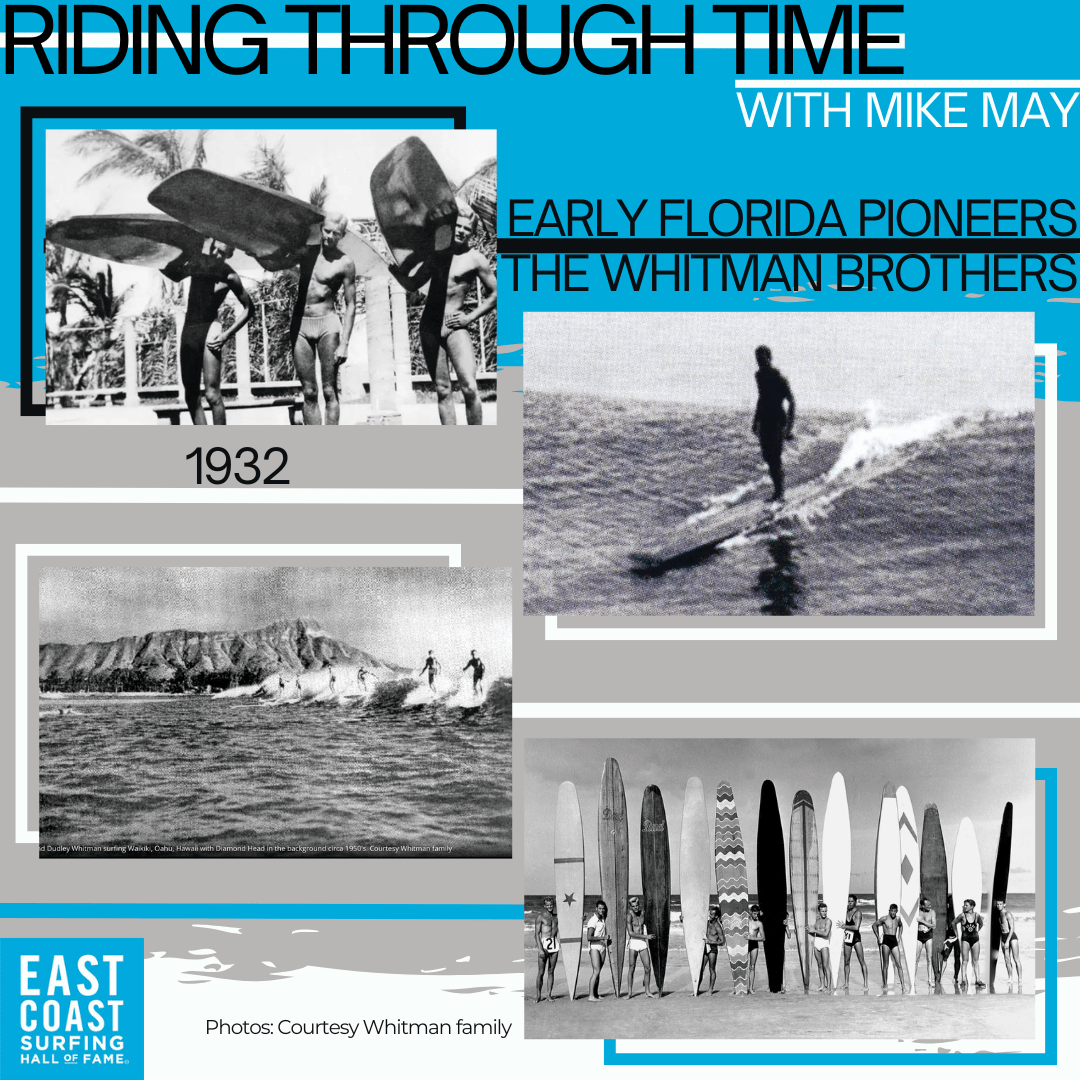
1932

with Mike May
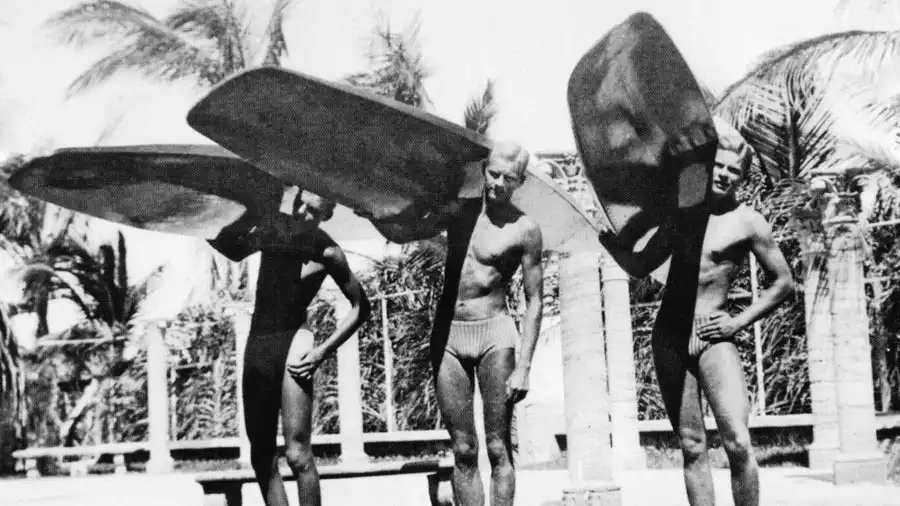
The Whitman brothers circa 1930s. L – R, Dudley, ECSHOF 1998, Bill and Stanley.

Much can be said about the cross pollination of surfing culture and innovation. From the earliest history of the Polynesian culture and its influences on surfing around the world to the later years of traveling surfers like Australian Peter Troy and Southern Californian Dick Metz, who accelerated the progress of surfing internationally, the sport has many lineages that have influenced its advancement. You would have to agree that brothers Bill (born in 1916) and Dudley (born in 1920) Whitman, who lived both in Michigan on the Lake and spent winters in Miami Beach, would take the influence of multiple surf pioneers and cultures to bring surfing to the beaches of Florida.

Spending their early years in the 1920’s both on the shores of Lake Michigan and on the beaches of Miami the family eventually moved permanently to Miami Beach where the boys would take to water sports as an outlet for their youthful energy. Learning to ride waves on both the Lake and the Atlantic, the brothers would get creative with bodysurfing and then, riding mats and bellyboards they made themselves. A chance visit by Virginia Beach surfing pioneers John Smith, Dusty Hinnant and “Babe” Braithwaite, who had traveled to Florida in 1932 to escape the cold winter in Virginia to surf the warm ocean waters of Miami on their 10-foot Hawaiian planks, would send the boys off on a lifetime of surfing.

ESCHOF Class of 1998 - Bill Whitman
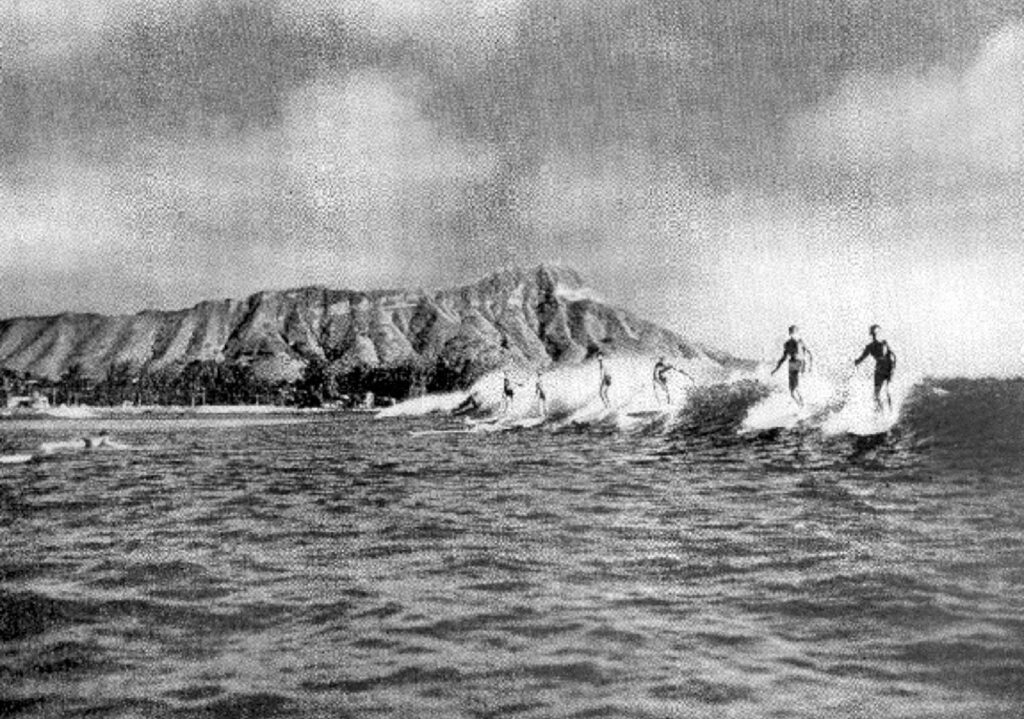
Bill and Dudley Whitman surfing Waikiki, Oahu, Hawaii with Diamond Head in the background circa 1950s.

It would be William “Bill” Whitman who would jump on the new-fangled wave riding equipment and after catching a few peelers would head to his fathers shed to build himself a 10-foot Hawaiian style plank out of sugar pine. Not to be outdone, Dudley would make his plank out of redwood, the more traditional wood used for board making at the time. Continuing with the theme of cross pollination, a chance encounter with the legendary Tom Blake, who was lifeguarding in Miami Beach in 1932, would be even more of a spark to the imagination of the Whitman brothers. Seeing Blake riding the waves on his hollow surfboard would begin a relationship with the surfing pioneer that would bring the boys well beyond the confines of the beaches of Miami.

Soon the brothers would start making hollow boards based on the designs published in Blake’s 1937 article in Popular Mechanics called “Riding the Waves.” The Whitmans would refine the design with changes like using dowels instead of screws to make the hollow boards along with a drainage system to keep the boards from getting waterlogged. Blake would eventually become such a good friend of the Whitmans that whenever his travels brought him to Miami Beach he would stay with their family.

ESCHOF Class of 1998 - Dudley Whitman
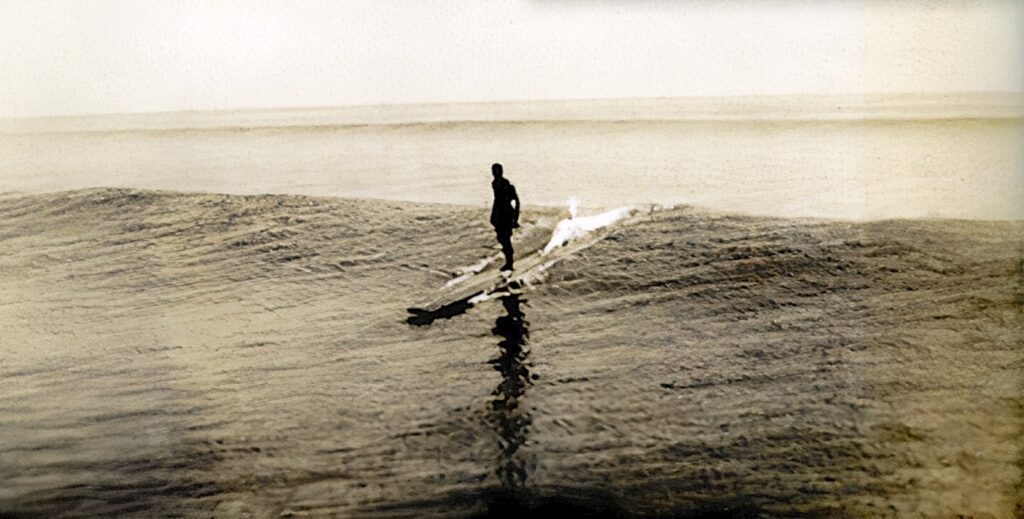
Bill Whitman surfing Miami Beach, 1930s.

In the summer of 1937, the duo would strap their boards to the top of their car and head West to Los Angeles where they would surf the Pacific waves with their newfound friend, Blake.  Not satisfied with a visit to California the brothers hopped on the steam ship SS Lurline headed for Hawaii where they would surf the waves of Waikiki making friends with the locals, who marveled at the beauty of their self-built hollow boards, which they brought with them from the mainland.

With an introduction letter from Tom Blake, the brothers approached Duke Kahanamoku on the beach by the Outrigger Canoe Club hoping to get acceptance into the club. Initially being told the club had no room for them that changed quickly when they unpacked their Blake-style hollow boards.  Soon a crowd of Hawaiian Beach Boys, who were admiring their boards, picked them up and brought the Whitmans and their boards into the Outrigger Club. From that day on they became honored members of the legendary home of Duke and his brothers.

The Whitman’s initial foray to Hawaii would begin a love affair with the Hawaiian Islands, especially Oahu, that would continue for the rest of their lives and be handed down to their children, who remember fondly being pushed into waves on the beach by the Outrigger Canoe Club. Upon their return from Hawaii after that first trip the boys would bring back more than just surf stories. Soon they would be known as the first free diving spear fisherman in Florida, something they learned from a local who had crossed their paths while they were lounging on the beach at Waikiki.  The Miami Herald Society page, in a story on the brothers return from Hawaii in 1937, would write “They competed in various other water sports that reflected glory to their hometown.” Both were excellent fishermen and sailors with Dudley winning the 1940 Bimini-to-Miami race covering the 50 miles in just 14 hours.

ESCHOF Class of 1998 - Bill Whitman
1938 East Coast Surfing Championships, Daytona Beach, Florida.
(L-R) Bill Whitman, ECSHOF 1998, Stan Whitman, Dudley Whitman, ECSHOF 1998, Donald Every (event winner), Paul “Bitsey” Hart, Paul Graves. Last four competitors right not identified.

After serving in World War II, Bill and Dudley would embark on a new career as filmmakers. They would also receive a patent for an underwater camera that they would use in their films “Riding the Waves” and “Five Fathoms of Fun” that were released by Paramount Pictures in 1947. The documentary “The Sea Around Tahiti,” which they provided the water photography, would win an Academy Award in 1953. Not interested in staying in the past Bill in 1955 would meet up with West Coast board builder Hobie Alter and after much cajoling he would become the first Hobie distributor on the East Coast.

The Whitman brother’s wanderlust was not limited to trips to the West Coast and Hawaii, of which there were many, they would also venture to the uncharted waters of the Bahamas where they would find the pristine waves on the outer island of Eleuthera. The pioneered surf breaks in the area that opened a new surf mecca that friends like Daytona Beach surf pioneer Gaulden Reed and Miami cohort Dick Catri would join the Whitman family sojourns to the aquamarine playground of the Bahama reefs.

The Whitman Brothers
The Whitman Brothers in Waikiki in the early 1930s.

The legacy of surfing and being adventurous was handed down to the next generation of Whitman children. William’s son Chris won the Hawaiian State Championship at the age of 8 and his sister Pamela competed on the World Professional Surfing Tour specifically in Hawaii in the 1980s, Dudley’s daughter Renee won the first East Coast Championship in 1963 and was inducted into the East Coast Surfing Hall of Fame in 2004. In an article in 2011 Ocean Magazine, Pamela Whitman Mattson (William’s daughter) talked about the magical upbringing the Whitman brothers had provided their children.

“I started surfing in Waikiki at the age of 5 in 1961. My father pushed me into a wave in front of the old Outrigger Canoe Club against my will and I panicked. That ended my surfing until our next visit to Hawaii in 1963, and at age 7 I totally took to the sport. Literally, everyone in my family surfed. My father, mother, older brother Chris (by 16 months), younger brother Eric (by 7 years), Uncle Dudley, his four children Dudley Jr., Renee, Billy and Todd, as well as Uncle Stanley. It was a family affair, and we took many surf safaris together. Some of the most notable were trips were to Hawaii and Eleuthera, Bahamas. My father took our family all over the world to surf. As children we spent alternate summers surfing in Hawaii or Europe (Biarritz, France and Newquay, England).” In 1975 the family would land in Java and surf the waves of Kuta Beach and Bali.

The influence on Florida surfing by the Whitman brothers is immeasurable. The term waterman is bandied about freely when describing individuals these days but the Whitman duo should be the poster children for how a true waterman’s skillsets are measured. The Whitman brothers were inducted into the East Coast Surfing Hall of Fame in 1998.

Whitman Brothers
 The entire Whitman clan in Hawaii.
ESCHOF Class of 1998 - Bill Whitman
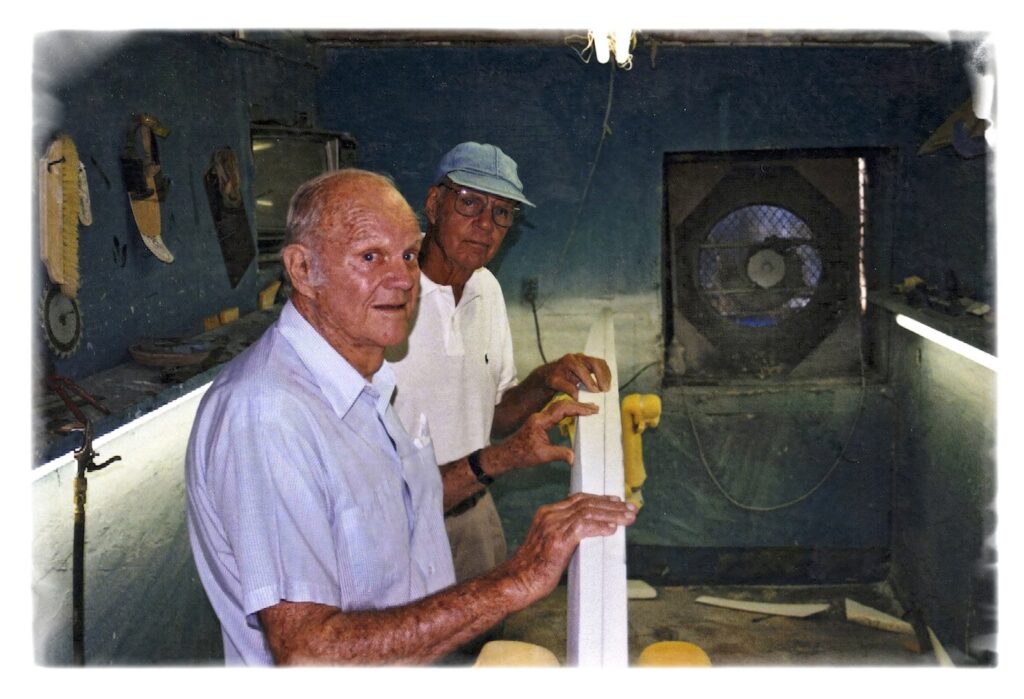
Bill Whitman feeling the rail in a friend’s shaping bay.
Photos: Courtesy Whitman family.

2025-08-29T02:21:21+00:00

The Origins of Surfing In Virginia Beach

The Origins of Surfing — Virginia Beach, Virginia

1912

with Mike May
Riding Through Time - Dewitt
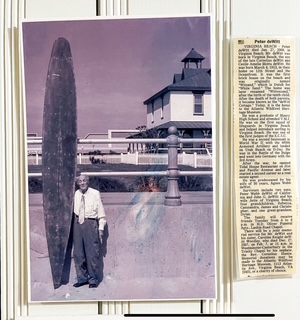
Peter Dewitt  Photo: Atlantic Waterfowl Heritage Museum

SURFING gathered minimal interest on the mainland USA in the late 1800s and early 1900s. Sure, there were the occasional references to the sport with Captain Cook, then Mark Twain, and finally Jack London espousing the beauty of the Hawaiian natives riding the “billowing crests” of the waves in Waikiki. The young Hawaiian Princes in Santa Cruz, California in 1885 and Emma Spreckels surfing in Asbury Park, New Jersey in 1888 standout as possibly the first mentions of surfing on either coast of the mainland. However, the real catalysts to the first endeavors to ride waves on the East and West Coasts can be credited to a few early proponents.

First would be Alexander Ford Hume, the sometimes-noted racist from South Carolina who, when arriving in Hawaii in 1907, would see the opportunity to promote the Islands by expounding on the amazing surf riders in Waikiki.  Hume at times promoted the abilities of the white board riders stating their skills were equal to those of the Native Hawaiians.

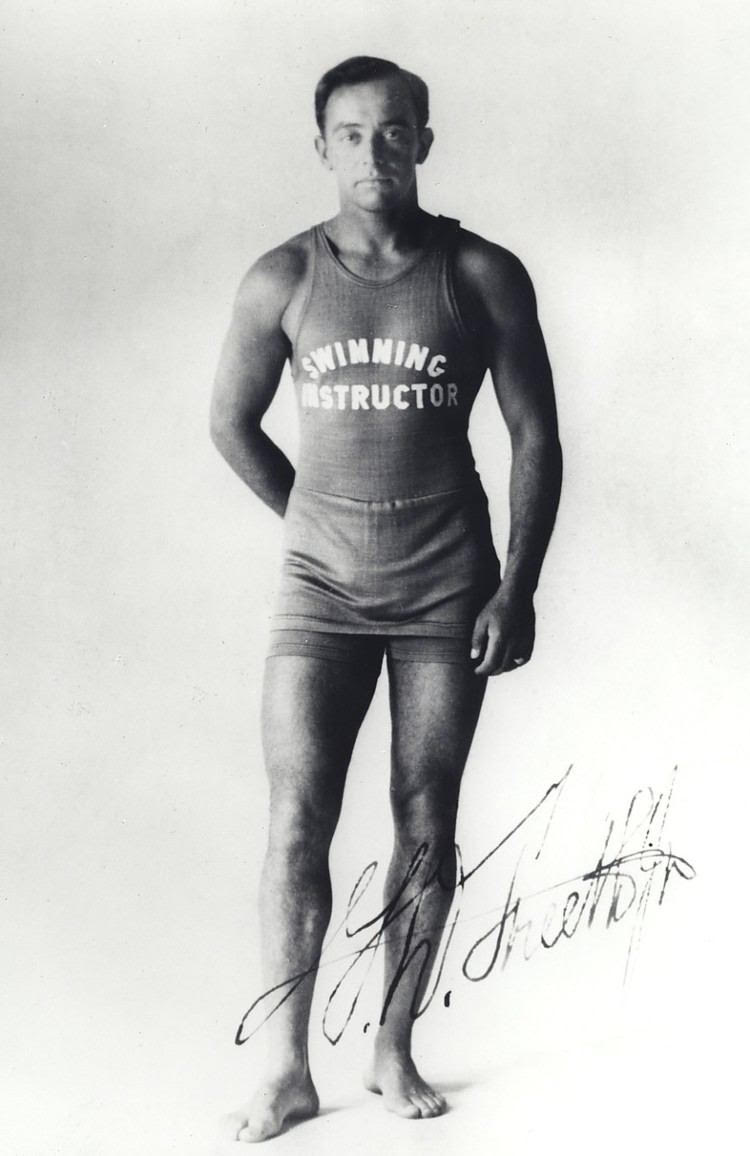
Hume met the legendary George Freeth, who was half Hawaiian and thus met some of his requirements of ‘whites only’ that was his mantra when starting the Outrigger Canoe Club.  Hume then promoted Freeth during the legend’s first visit to California in 1907. Freeth was welcomed with open arms and his skill riding the waves became the first real example that the West Coast beach goers would see in person.

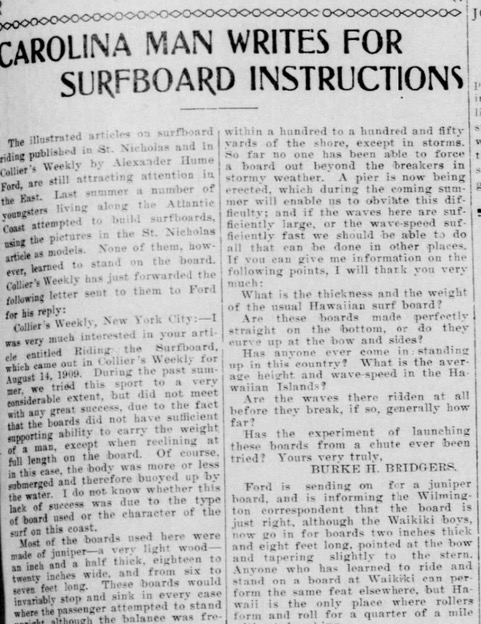
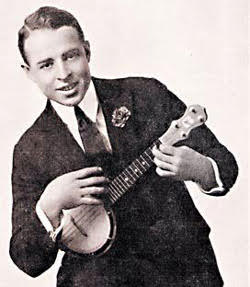
In 1908 and 1909 a young Hawaiian student attending college in Pennsylvania by the name of Alvin Keech wound up on the beaches of New York and New Jersey with Hume and two surfboards that they brought from Hawaii. In a letter Hume wrote to the Honolulu Gazette in the summer of 1909, he describes surfing the waves of today’s Rockaway Beach, NY with Keech and notes that “boardriders” are already taking up the sport in Atlantic City, NJ. Keech went on to be a renowned musician, who invented the banjulele.

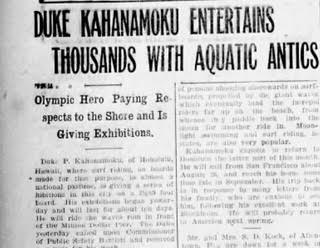
In 1910 a group of musicians, dancers, swimmers and divers were sent by the State of Hawaii to the Atlantic City Exposition to promote Hawaii as a destination for tourists. Since Keech was already in the area he was hired to give surfing demonstrations during the entire summer. Surfboard riding took off with the locals and by the time Duke Kahanamoku, the true father of modern surfing, arrived in 1912 he was joined in the water by locals, who had been riding the waves for two years.

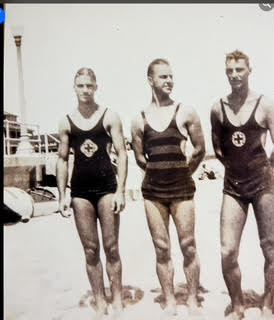
It was in this time frame that surfing started to find participants up and down both coasts. It comes as no surprise that the first real acolytes of the Hawaiian influence were the lifeguards.  Atlantic City had established a professional life saving group in 1891 and Long Island was close behind. Soon, resort areas created their own life saving corps, some volunteer and some paid, and it was in this petri dish of ocean awareness that surfing took hold.

It would take a number of years of beach and ocean awareness before the coastal town of Virginia Beach, Virginia established their lifeguard corps.

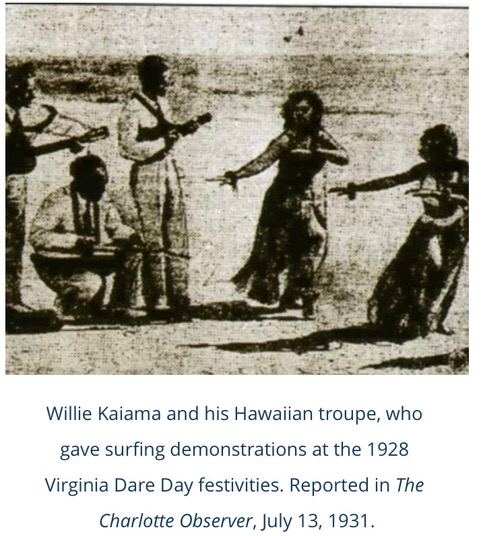
Surfing arrived in Virginia Beach in 1912 when James M. Jordan Jr. received a package from his world traveling uncle of a Hawaiian surfboard, which was 12 feet long and weighed in at 100 pounds. Jordan became a curiosity on the beaches as he would drag his Hawaiian plank to the surf and attempt to ride the local waves. Hawaiian culture was being presented throughout the U.S. and especially in Virginia and North Carolina, and surfboard riding was on display by Hawaiian Willie Kalama on the beach where the Wright Brothers first flew their glider on the sand dunes of Kitty Hawk. But it would take a group of young beach and ocean lovers to become the first lifeguards and to set the course for surfing to develop in Virginia Beach.

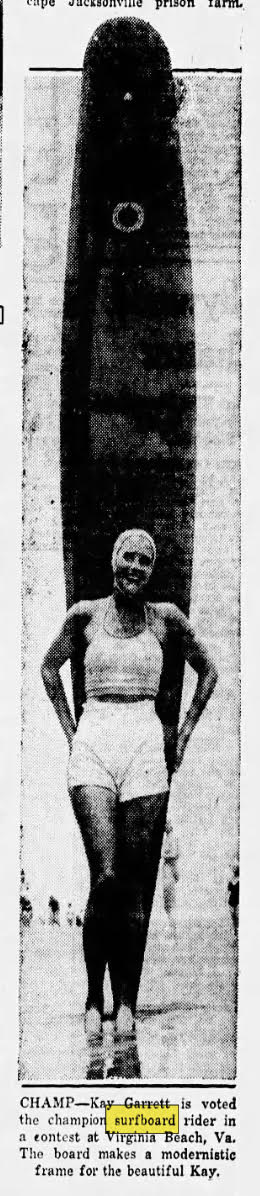
By the late 1920s surfing still had yet to grab on to the general public on Virginia’s beaches, however in 1930, with the establishment of the VB Lifesaving Corp, young men started figuring out a way to create a beach lifestyle for themselves. Names like Babe Braithwaite (ECHOF 2000 Inductee) along with friends John Smith, Bob Holland Sr. (ECSHOF 1996 Inductee) and a trio of brothers, the deWitts, were the real pioneers of lifeguarding and surfing in VB. Women were also a part of the surf riding community with Kay Garrett the top female rider of the era.

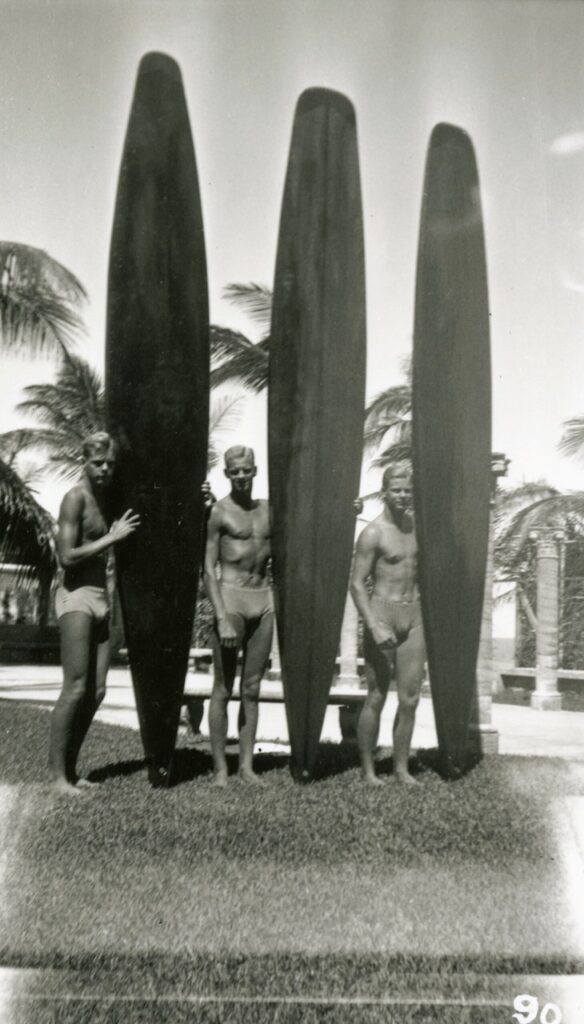
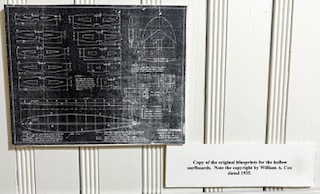
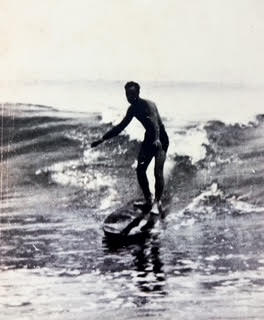
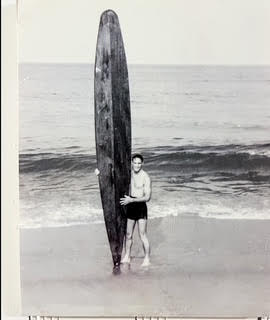
Though Peter deWitt’s name is certainly known outside of the VB beach community, his contributions are mostly lost to the greater East Coast surf world.  Born in 1913, deWitt was among a group of six individuals, who were the first to build boards for use on the Virginia beaches. The group also included Buddy Cox, Bill Cox, John Smith, Dusty Hinnant (ECSHOF 2000 Inductee) and Pierre Cronnenbergh.  Copying a Tom Blake design that had been seen on the beach in Florida where Blake had come to lifeguard, the group realized they had to improve on Blake’s boards, which were heavy and had a tendency to leak. Cox drew up blueprints that looked like proper naval designs and the six young men hauled their heavy lumber to the beach where they assembled their surfboards in the basement of Cox’s parent’s beachside home. Surfing had arrived and the surf lifestyle would come along with it.

VB’s surf pioneers were more than just lifeguards and surfers, they embraced other board sports and the long time tradition of busting each other’s chops. In a short article published in 1936 in the Norfolk Ledger, there is an example of both. “Peter deWitt, well known Virginia Beach Surfboard Rider, announced to his friends that he would leave Sunday for New York, where he would teach skiing.”  “But,” said one “you’ve never skied in your life.” “Well,” Peter said, “I’ve ridden a surfboard and ice skated so of the two I should have a fair idea of how to ski when I get there; I expect after a while, I’ll be good enough to teach.” “I hope,” growled Bill Cox, “that after this winter you will be able to ride a surfboard better than you do now.”

deWitt and this core of original pioneers, along with Holland and Braithwaite, set the standards for lifesaving in Virginia. Numerous articles can be found in the Virginia Pilot chronicling the many dangerous situations these waterman put themselves in to save people’s lives. In 1935 this crew held a 26 mile paddleboard race between Cape Charles and Cape Henry. After an article in the Pilot suggesting the paddlers got lost in the fog and needed help to return to shore, Braithwaite lambasted the local paper saying that none of the participants got lost and the Coast Guard boat was only there to bring them back after the race was completed. To underscore the skills these surfers had developed, two of the crew paddled an extra three miles and took the local ferry home!  Many of the surfers spent the winter in Florida where they connected with the Whitman brothers, Bill and Dudley (ECSHOF 1998 Inductees), working together to improve the quality of their surfboards.

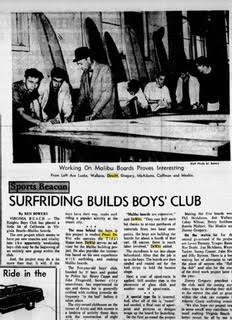
The reason deWitt is such an interesting member of the group is because he took photos of the early days with their self-made boards. His parents built the first brick home on the beach on Oceanside Ave.  Though it is called the deWitt Cottage, it is now home to the Atlantic Waterfowl Heritage Museum. Peter deWitt and those original watermen maintained a relationship with surfing and the ocean for their entire lives. deWitt was a mentor to many of the young surfers in Virginia Beach, helping the local Boys Club to build their own surfboards in 1962. When Bob Holland and Pete Smith brought the East Coast Surfing Championship to Virginia Beach in the early 60s, Peter deWitt was on the first judging panel. deWitt was a Lieutenant in World War II with the 695th Armored Artillery Group that landed at Utah Beach and went on to fight in the Battle of the Bulge. After the war he opened the Tidal House Restaurant in Virginia Beach, the town where he lived to the ripe old age of 92, often posing with the original board he built in the 1930s on the beach in front of his family home, the deWitt Cottage.

Click photo to enlarge and scroll through gallery

Photos by: AC Press, Braithwaite Family Archives, Dewitt Family / Atlantic Waterfowl Heritage Museum, LA County Lifeguards Trust Fund, Popular Music Weekly, Roanoke World News, and The Virginia Pilot

2025-04-30T22:01:17+00:00
Go to Top